
Sacred Vowels
A dive into the astrology and ecstatic nature of sound and place.

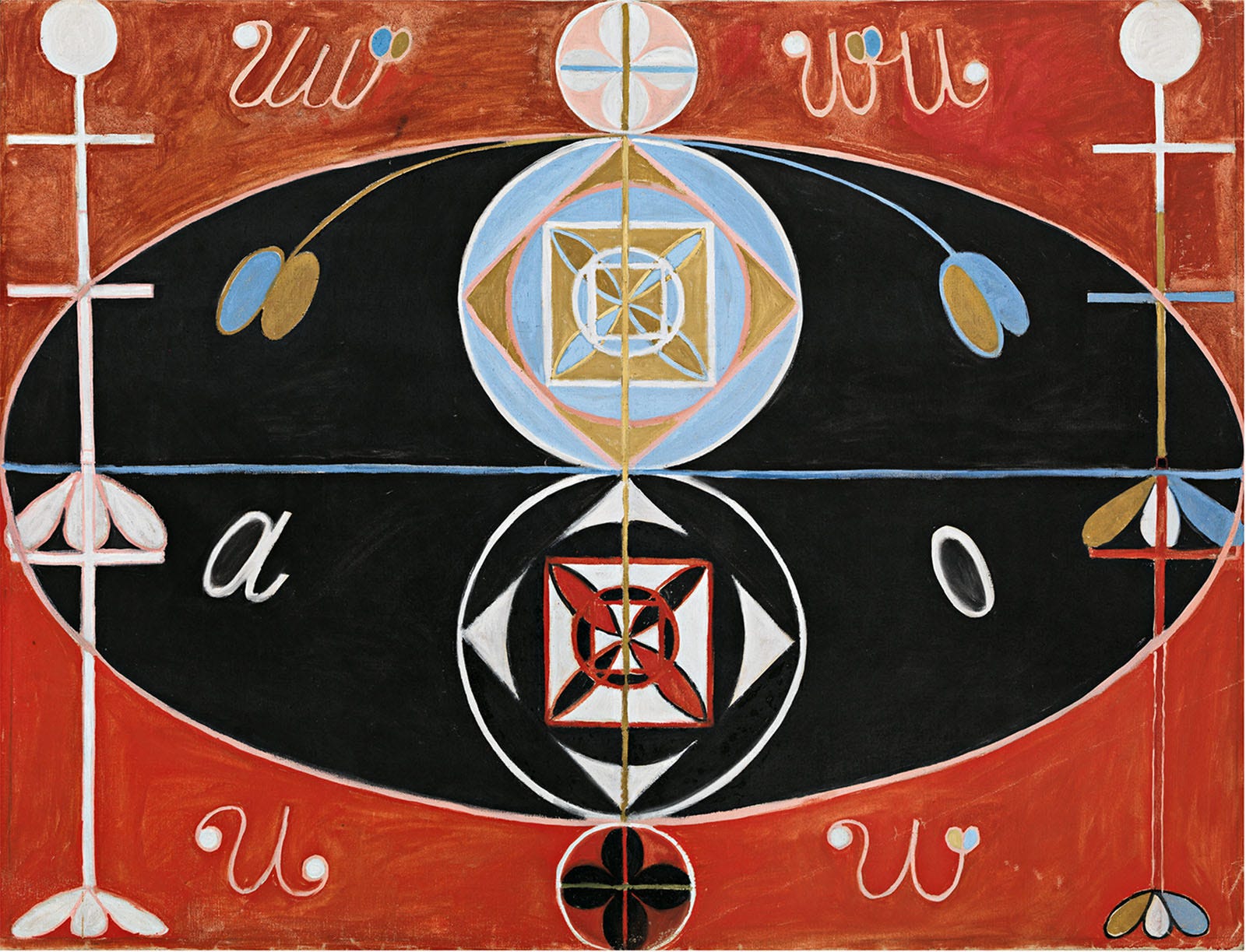
My recent rummages into the texts of Corpus Hermeticum and Nag Hammadi revealed an interesting detail that I couldn’t help but explore. The reason it grabbed my attention is loosely linked to the name of our house in the Hudson Valley, DeJoux House—taken from the French Huguenot family that built our home in 1755. The Huguenot families that founded New Paltz came from the Picardy/Artois regions of France and according to written records, the Deyo family who built our house, wrote this name is “de JOU”, “Doiau,” “Doyau,” or in Latin “d’IAHO”.
I have for some time imagined that this name originates from a secret practice of unauthorized Gnostic or Hermetic practices that had inspired my cards, called the Book of Jeu/Book of IOU. This was not an total impossibility because a leading expert in early Christian sects, Dr. Erin Evans, suggests there was a tight, religious community called ‘Jeuians’ that existed with strict behavioral rules and moral living practices. Because the church records and documents of churches were destroyed during the persecution of the Huguenots, there is little written evidence that the refugees who founded New Paltz, Christian Deyo, Simon Lefevre, and others adhered to such beliefs…
…but, as I poke around, I think there is now a small possibility that this was the case.
According to O. I. A. Roche in his book, The Days of the Upright: A History of the Huguenots (1965), the name Huguenot is a combination of a Dutch and a German word for Bible students who gathered in each other's houses to study secretly and were called Huis Genooten (‘housemates’) or Eid Genossen (‘oath fellows’).
Early French Protestants were objecting to the corruptions of the Catholic Church, long before Martin Luther and Calvin systematized and radicalized these ideas into Protestant Christianity. These early spiritual rebels depended heavily on a practice they called ad fontes (back to the sources) that focused on study of original Greek, Latin, and Hebrew texts, to separate out the original meaning from the corruption of second-hand Catholic interpretations.
Now, doesn’t that sound familiar!
More importantly, one of the most prominent figures in the emergence of the Huguenots in France was Jacques Lefèvre d'Étaples, who founded the ‘Cenacle of Meaux’ —The Meaux Circle. This religious community was steeped in the ad fontes method and ignited the French evangelical Reformation. To make things even more interesting, the Lefevre family was one of the founding families of New Paltz and the houses immediately across the river from our home were built by them. These Lefevres and the DeJous (later anglicized to Deyo) were also from the Picardy/Artois region of France and would have been familiar with the Cenacle of Meaux for which Lefevre was most famous. According to the local historian Ralph Lefevre, who wrote The History of New Paltz (1903), these founding fathers “were the kindred of James Lefevre, the great French preacher and reformer, who was from Étaples.”
Now, I’ve found that Ralph Lefevre never let details get in the way of a good story, especially if it meant prestige for his family heritage. The truth is that Jacques Lefevre was not a direct relative. The name Lefevre means ‘ferrier’ (Smith in English), so was common all over France. Jacques Lefevre from Étaples was celibate and had no children, so he was not a direct descendant. However, there is good evidence that his famous writings and teachings about Hermetic and mystical interpretations of Christian texts were still very influential in France at that time. The Meaux circle was 25 miles east of Paris, towards the Flemish/French borders, and between Paris and the regions of Picardy and Artois. Jacques Lefevre was well-documented preaching in Meaux and publishing his writings in the exact same region of France where the DuBois, Lefevre, Bevier, Hasbrouck and Deyo families of New Paltz originated from.
This is important, because Jacques Lefevre d’Étaples personally visited Florence (in 1491-1492) as a theological scholar to learn from Hermetic translators and Christian Kabbalah experts Marsilio Ficino and Giovanni Pico della Mirandola—just between the writing of Oration on the Dignity of Man (1486) and its publishing (1496)—which you might remember from my previous post. On his return to France, he did two things: he wrote a book of natural magic, De Magia, Naturali that was never published and he edited an important French edition of the Corpus Hermeticum, which was published and led to a prosperous writing career.
He wrote about the divine spark as an inner conduit for direct union with God. He actively explored the idea that a fragment of divine intellect (pneuma) resides within our soul. He blended Neoplatonic mysticism with Christian, Hermetic and Jewish Kabbalah theology and argued for internal spiritual intuition and the power of love as a uniting force. He talked about a coincidence of opposites (equivalent to the syzygies of Aeons) that had the power to transform duality and tensions into unity and balance—all ideas that almost certainly came from going back to the original source texts, outside the canonical scriptures. And, just to make me like this guy a little bit more than I already do, he preached for the practice of spiritual life over intellectual scholasticism.
Two things are almost certain: Jacques Lefevre was not your typical Lutheran/Calvinist Protestant because he was deeply mystical and magical in his interpretations of Christian texts. Secondly, although he chose not to publish his writing, De Magia Naturali, it would have featured heavily in his in-person teachings in Meaux and the surrounding Protestant communities—who were later labelled ‘Huguenot’. To my eyes it seems almost impossible that the Huguenots who founded New Paltz were not aware of their namesake and were very likely to have been deeply influenced by some of Lefevre’s humanist, Hermetic and mystical writings.
From d’IAHO to Deyo
Jacques Lefevre d’Étaples is well documented as having studied comparative texts that describe the language and biblical names of God in Aramaic, Greek and Hebrew (e.g., Jerome’s letters to Marcella). As such, he would have been deeply familiar with the correct and proper rendering of the Greek name for God—IAHO or IAO
With such a strong theological connection to Lefevre’s writing and ancient text studies, it’s also very likely that the Deyo family (who back then wrote their name DeIau, deYoo, deJoux) recognized that their name had within it a linguistic reference to the divine entity. YHWH, when phonetically transliterated from Hebrew to Greek, becomes ΙΑΩ, which in Latin is written as IAHO or JEU. Add the d’ in French that means ‘from’ and you get D’Jeu or DeJoux.
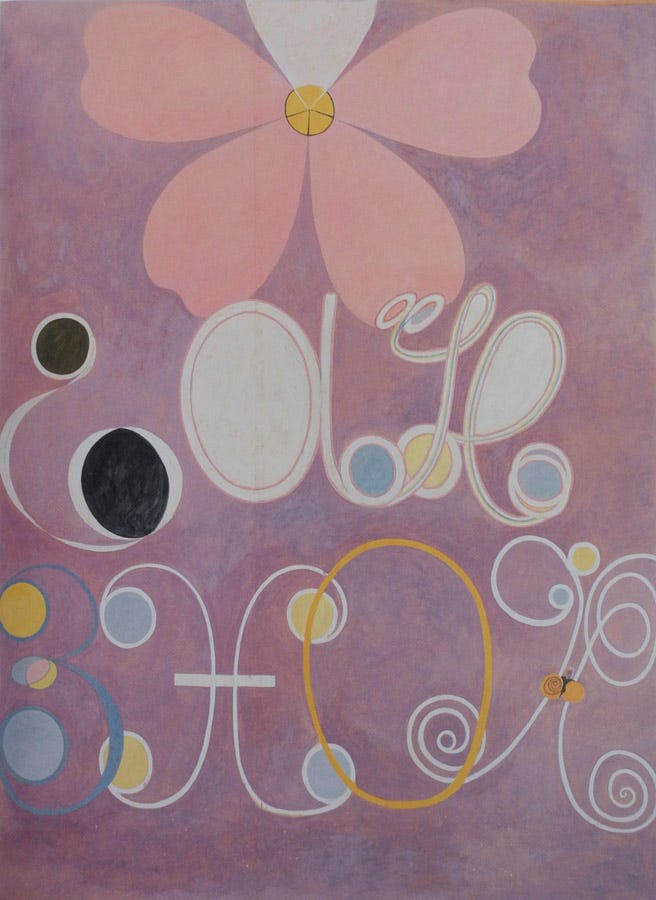
The divine significance of vowels
A name made up entirely of vowels, like DeJoux/D’Iao, was significant. Dating back to ancient Greek linguistic terminology, vowels were called ‘phōnēenta,’ meaning that these letters were self-sufficient—they could be sounded without other accompanying letters. All the other letters, the consonants, were dependent on other letters to be sounded and were called ‘symphōna’, meaning ‘sounded together.’
Vowels for the ancient Greeks were the living portion of language—the breath, the spirit, and the part of a word that carries life. Consonants were inert structure; vowels were soul.
To the writers of these early Christian texts, such as Valentinus or Hermes Trismegistus, language was just one of many units in the universe’s harmonic structure. For them, vowels structured our words in the same way as musical notes structured music and the planets structured the cosmos. Three different, but similarly balanced, connections to the universe—seven vowels (at least in Greek), seven strings on a lyre, seven planets in the solar system, and seven steps to heaven. They believed that this universal order was why there was and is beauty in the world, and why the human voice, properly directed, could resonate in harmony with the seven notes on a lyre string and vibrate to the frequency of the seven planets—thus emanating our musical praises across the cosmos and ultimately to God. Like the Aeons, our vowels and our notes emanate from the very core of who we are.
Vowel Planet Music (Pliny intervals/Pythagoras)
Alpha (Αα) Moon D (1 tone from C)
Epsilon (Εε) Mercury E flat (half tone)
Eta (Ηη) Venus E (half tone)
Iota (Ιι) Sun G (1½ tone)
Omicron (Οο) Mars A (1 tone)
Upsilon (Υυ) Jupiter B flat (half tone)
Omega (Ωω) Saturn B (half tone)
Sacred chants
Coming back to the beginning of my story, the texts within the Corpus Hermeticum and Nag Hammadi shared a number of descriptions of religious chants that were remarkably similar.
The first is within the Book of Jeu, which is sort of a ‘How to’ guide from Jesus to his disciples (if you remember he didn’t die in the resurrection, instead returning to pass on secret teachings). The text includes descriptions of the tools of gnosis in practical and ritual form—descriptions of magical seals, secret diagrams, responses to achieve safe passage through the seven heavens. This journey of enlightenment describes encounters with characters like The Watchers (Grigori on my cards) whose names are complex vowel sequences that are not easily translated—zazazoo, azaz, aowazawaza etc. The first Book of Jeu describes the outward journey of the soul across five planetary planes (plus an additional two at the beginning that are most likely the sun and the moon) making a magical total of seven heavenly realms. The second Book of Jeu takes us on the opposite journey—the inner journey—that warns us to be on the lookout for the distractions and trickery of the Archons (which should be read as inner psychologies) who exist to prevent us from connection to the heavenly resonances we know as the Aeons.
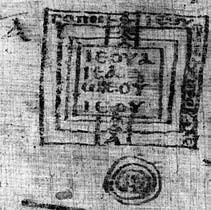
We also find heavy use of vowels in the Hermetic texts Discourse on the Eighth and Ninth, which describes a similar passage of enlightenment. In this text, Hermes Trismegistus fulfils a long-standing promise to his son and student Tat, guiding him through a visionary ascent into the Ogdoad (the Eighth sphere, beyond the seven planetary heavens) and then into the Ennead (the Ninth), the realm of the highest divine mind (Nous). Although this text is slightly different in nature, being more of a first-hand description of the initiation rites, rather than an insider’s guide to the secret passwords, it follows a similar format and again focuses heavily on vowels.
Within this Hermetic text, we find more vowel strings, this time as chants or hymns before and after initiation:
"...the one mighty power, who is exalted above majesty, who is better than the honored ones, Zoxathazo a oo ee ooo eee oooo ee oooooo ooooo oooooo uuuuuu oooooooooooo ooo Zozazoth."
Later in the same text, the Discourse, we also come across a ‘Thanksgiving hymn’ of divine illumination:
"I praise you. I call your name that is hidden within me: a o ee o eee ooo iii oooo ooooo ooooo uuuuuu oo ooooooooo ooooooooo oo. You are the one who exists with the spirit."
If you remember, Jung stated that people tend to start off projecting their true nature onto an outside authority—like a leader, an institution or a cause. According to him, ‘individuation’ (true enlightenment) only comes with the realization that our true authority rests within us—Imago Dei. It’s interesting, while looking at these old texts, that before initiation, the vowel chants are externalized to an external power while the chants ‘after initiation’ refer to a ‘name’ that is ‘hidden within me’—an inner authority.
A planetary description or something deeper
Not surprisingly, given the association between the vowels and the planets, there have been a number of theological scholars who describe this vowel chant as a planetary map where the seven Greek vowels trace the ascent through the spheres, with the long cascades of Omega signifying the moment of passing through the boundary between the seventh sphere and the Eighth—all that ooooooooo is essentially, knock, knock, knocking on heaven’s door.
I had, of course, considered this as the last word on the subject and believed the planetary explanation… until just recently. Earlier this year, I came across some academic work on this topic that struck a deep chord for me.
A gentleman called Florian Audureau (2021) argues very persuasively that the planetary interpretation of vowel sequences in ancient texts is largely a modern construction, and that the primary function of vowels was pneumatic — e.g., they embody the creative power of breath.
I love Audureau’s interpretation, because just like Jacques Lefevre’s preference for lived experience, this makes the texts genuinely useful rather than scholarly.
As a planetary code, a prayer like ‘The Thanksgiving Prayer’ teaches us that our only salvation can come from a persistent and maniacal ‘hammering on Saturn’s gate.’
Α Ο ΕΕ Ο ΕΕΕ ΩΩΩ ΙΙΙ ΩΩΩΩ ΩΩΩΩΩ ΥΥΥΥΥΥ Ω Ω Ω Ω Ω Ω Ω Ω Ω Ω Ω Ω Ω Ω Ω Ω Ω Ω Ω Ω Ω Ω
Moon — Mars — Mercury — Mars — Mercury — Saturn — Sun — Saturn — Saturn — Saturn — Jupiter — Saturn — Saturn(×9) — Saturn(×9) — Saturn.
Alternatively, as a breath exercise, this twelve-count Omega (Ω -Ohmm) on a single exhale becomes the slow, diaphragmatic emptying that we know has the power to activate the parasympathetic nervous system, slow down the heart, and produce a shift in consciousness that almost every culture on the planet has discovered.
Just try it. Run through the seven vowel sequence Α-Ε-Η-Ι-Ο-Υ-Ω slowly and pay attention to the physical shape of it. Alpha Α (aah, just like at the dentist) is the most open sound the mouth can make—jaw dropped, throat wide, maximum aperture. Epsilon Ε (a short ‘eh’, as in pet). Then Eta Η which narrows the sound down to a long ‘ee’ (as in bee). Shift the sound slightly to Iota Ι (‘i’ as in ski) this is the most closed and forward vowel — tongue high, aperture tight, the sound focused to a point. Then Omicron Ο (short o, as in ‘not’), and the sound moves back and down, but still in the mouth. Upsilon Υ (oooh as in ‘boot’) which rounds the mouth and tightens it further until we finally descend into deep, rounded, chest-resonant closure Omega Ω (rounded o as in ‘tote’ or ‘ommmmmmm’).
Α Ο ΕΕ Ο ΕΕΕ ΩΩΩ ΙΙΙ ΩΩΩΩ ΩΩΩΩΩ ΥΥΥΥΥΥ Ω Ω Ω Ω Ω Ω Ω Ω Ω Ω Ω Ω Ω Ω Ω Ω Ω Ω Ω Ω Ω Ω
So the sequence of the chants, as performed, is both a spiritual and physical journey: from maximum openness (A, Ahhhhh), through a focused point of concentration (I, Ieeeee), then descending into deep, rounded, chest-resonant closure (Ω, Ohmmmmmm).
You could not design a more powerful breathing exercise to embody the feelings of maximum openness and readiness to receive. A concentration of attention followed by a deep, universe resonating interiority. For me, this interpretation, rather than a planetary one, makes these texts so much more magical. They simultaneously describe a theoretical ‘ascent through the spheres’ while also demonstrating how an altered state of consciousness can be achieved through breathing.
The next time someone asks me how to say the name of our house (DeJoux), I should give them a chant. DAAHIIIYYYΩ Ω Ω Ω Ω Ω.
This is the perfect name for our house. A house that resonates perfectly with the Sun (I), the Moon (A), and Saturn (Ω). The sun rises perfectly in front of our house on the equinox every year. The sun is the central power of the universe but it is also, literally, central to our house. The moon is the first, the closest to us, and a reminder to keep our eye on all that we have. Saturn is the last, the last step on the journey, and it promises us infinite potential ahead. The house is D’IAΩ (Sun, Moon, Saturn). The family D’IAO (of God). Our house is the vessel in which we journey from where we are now, to whatever’s next. Look out for some celebrations of DeJoux, Sun, Moon and Saturn on August 12th 2026 at 5.15am—that’s the exact moment when the Sun, Moon, Jupiter, Mercury, Mars, Uranus and Saturn are all in alignment. There’s also a solar eclipse later that day that some of us can ‘ohh and ahhh’ at.